
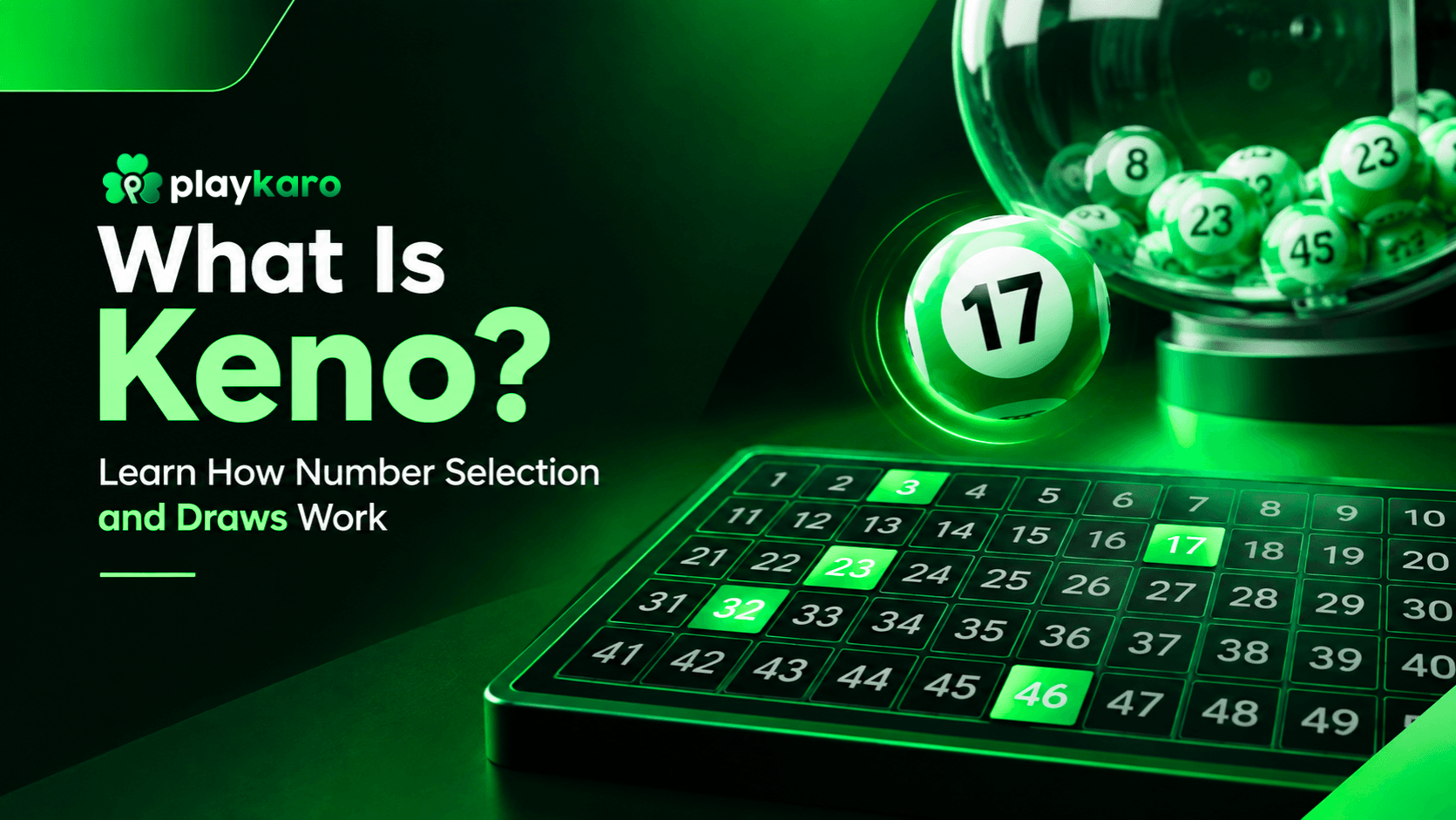
Keno is an easy game to play in which you select numbers, watch the numbers drawn, and check how many match. It is the basic concept that remains constant through all versions of the game. You select your numbers; the software picks out random numbers; and there is a fixed payout structure based on the results. This article explains all about Keno. If you want a clean start, check PlayKaro registration for access and game info.
How Keno Works in Simple Steps
The flow is straightforward. You pick up to ten spots from a grid, confirm your amount, and start the round. The board then shows ten winning numbers. Each match increases your reward based on a multiplier tied to your pick count and hit count. That is the important thing about how Keno works.
You can choose spots one by one or use a quick option for random picks. The interface shows your balance, current amount, and round status. Sound, history, rules, and fairness settings live in the menu. This keeps the session tidy and transparent.
Keno Rules You Should Know
The Keno rules are short and clear.
- Pick 1 to 10 numbers from 1 to 36.
- Confirm your amount before the round starts.
- Ten winning numbers appear on the board after the round begins.
- The payout multiplier depends on how many you selected and how many hit.
- You can select spots on the board or use random selection with one tap.
These points cover the base. The paytable drives outcomes, so it helps to glance at it before you start. That way, you know what a 3-hit or 5-hit return looks like for your chosen spot count.
Also Read: Mastering Chicken GOAL Field Paths: Defender Dodge Tips
Keno Number Selection Tips for Beginners
Smart Keno number selection keeps you steady. Many players do well with four to eight spots. This range balances risk and reward without spreading too thin. If you like patterns, try clusters or sequences. If you prefer variety, mix high and low numbers across the grid.
Random picks work fine too. The draw is independent each round, so no spot holds a permanent edge. Still, some folks review past frequency charts when available. This can guide choices, even though each new draw resets the board. To make a successful beginning, utilize number selector options within the game menu and stick to your chosen numbers for several draws in order to get into the rhythm.
Keno Game Draw: What Takes Place After Starting
Once you confirm, the round begins. Ten winning numbers display on the board. Your hits light up, and the system applies the multiplier from the paytable. The result posts to your balance right away. This is the standard Keno draw explained flow in most versions.
If you run multiple rounds, the counter shows remaining plays. You can stop at any time by tapping the counter. This gives you control without digging through menus. It also keeps the pace brisk, which suits players who like quick sessions.
Auto Play: When and How to Use It
Auto Play can save time if you plan to run several rounds with the same setup. You set stop conditions so the system halts when a threshold hits.
- Stop if balance drops by a set amount.
- Stop if a single win exceeds a set amount.
- Stop if balance rises by a set amount.
After you start, the counter shows remaining rounds. Tap it to end early. Note that this feature might not appear in every venue. When it shows up, use it with clear limits so your session stays controlled.
Game Interface and Controls You Will Use
The bet panel handles amounts. You can pick predefined options or enter your own. Use the minus and plus buttons to move between choices. Your balance shows available funds. The menu holds sound controls, bet history, game info, rules, and fairness settings. This keeps everything in one place and reduces clutter during play.
If you need company info or support, use the site footer. For privacy details, open the Privacy Policy. For controlled activity guidance, visit Responsible Gaming. General company info sits under About Us. Account or service questions go to Contact Us. This structure keeps help easy to find without leaving the game flow.
Payout Multipliers and How They Work
Payouts follow a fixed table. Your multiplier depends on two things. How many spots you selected and how many hit. More hits mean a higher multiplier, but the table changes with your pick count. That is why glancing at the paytable before you start matters. It sets expectations and helps you choose a spot count that fits your style.
Safety, Fairness, and What Happens on Interruptions
Fairness settings live in the menu. Provably Fair options let you verify round integrity. If a hardware or software glitch occurs, affected rounds and payouts become void, and amounts refund.If you lose connection while a round is on-going, the game will cash-out the current level of the multiplier and credit it to your account. This way, you’ll be saved from network problems and will have fair results.
Quick Tips for Smoother Sessions
Begin by filling four to six seats to get into the rhythm.
Play randomly at the beginning rounds to find the rhythm.
- Set Auto Play stop limits before you begin.
- Check the paytable for your chosen spot count.
- Keep amounts small while you learn the flow.
These steps reduce noise and keep focus on the game. It is easy to understand Keno rules, Keno numbers, and Keno draw process without being bogged down in theoretical terms.
Final Notes
This guide covered how Keno works, the core rules, and practical tips for number selection and draws. You now know how multipliers form, how to use Auto Play safely, and where to find fairness and support info. If you want to try a round with a clean setup, head to Playkaro and explore the game page. For more guides and contest picks, keep browsing the Playkaro hub.
FAQs
What is Keno and how does it operate?
Keno is a numbers game in which you choose up to ten numbers from 1 to 36. After you confirm, ten winning numbers appear. Each match increases your reward based on a fixed multiplier tied to your pick count and hit count.
How do I choose Keno numbers?
Use manual Keno number selection on the board or tap random. Many players start with four to eight spots for a balanced risk and reward profile.
What happens during a Keno draw?
The Keno draw explained simply: ten winning numbers display after the round starts. Your hits light up, and the system applies the paytable multiplier to your amount.
Can I stop Auto Play early?
Yes. Tap the round counter to end Auto Play at any time. You can also set stop conditions for balance changes or single win thresholds before you start.
Where do I find rules, fairness, and support info?
Open the game menu for rules, bet history, and Provably Fair settings. For privacy, see the Privacy Policy. For controlled activity guidance, visit Responsible Gaming. For company info, open About Us. For account questions, use Contact Us.
Final Notes
This guide covered how Keno works, the core rules, and practical tips for number selection and draws. You now know how multipliers form, how to use Auto Play safely, and where to find fairness and support info. If you want to try a round with a clean setup, head to Playkaro and explore the game page. For more guides and contest picks, keep browsing the Playkaro hub.