
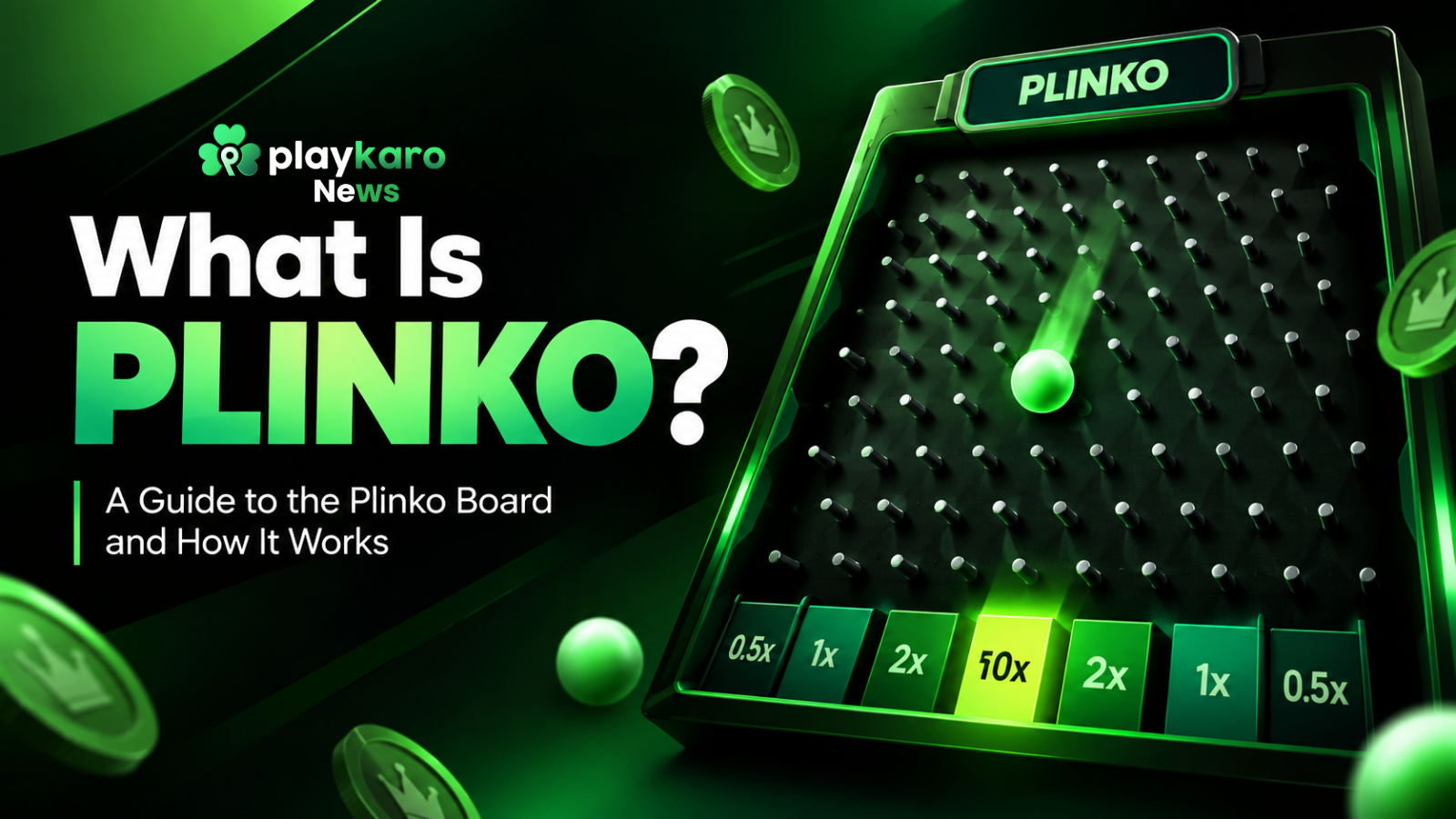
If a small disc can bounce left or right, why does Plinko still feel so surprising?
That question becomes clearer when you look at the board instead of the final result. Each peg changes the disc’s direction, while rows create many possible paths. Therefore, what is Plinko becomes easier to understand through its board design.
The round became famous through The Price Is Right, yet digital versions now use different settings. Meanwhile, the basic idea remains easy to follow for new players. This Playkaro guide explains what is the round, how the board works, and how results appear. It also separates chance facts from guesses about patterns.
From Television Board to Digital Round
Plinko became widely known through The Price Is Right, where contestants drop chips through a large pegboard. First, contestants identify correct digits in small rewards to earn chips. Then, they release those chips from the top and wait for funds below. The official round page says each chip can carry a huge value. Therefore, what is Plinko originally involves guessing before the physical drop. Today, online versions keep the falling motion but often replace funds with multipliers.
Inside the Plinko Board Layout
The Plinko board layout looks simple, but its arrangement controls the disc’s possible routes. At the top, the player releases a chip or disc into the playing area. Next, the object meets rows of pegs arranged across the board. Each contact can send it toward the left or right side. As a result, to know what is Plinko depends partly on how those rows shape movement. Finally, the disc reaches a place or multiplier near the bottom.
A Galton board uses a similar peg structure to demonstrate chance through repeated movements. With evenly placed pegs, each movement can send the ball left or right. Therefore, many different paths can reach central positions. By comparison, edge positions require more specific movement sequences.
How Plinko Gameplay Reaches a Result
Plinko gameplay usually follows a short sequence that needs little explanation.
- First, select the available settings before starting the drop.
- Next, choose the amount or entry value where applicable.
- Then, release the disc from the starting point.
- Afterward, watch it bounce between the peg rows.
- Finally, check the value shown at its landing position.
The exact steps can differ between providers and versions. Still, the main action remains familiar across most formats. A previous landing does not determine where the next disc will finish. Therefore, what is Plinko should not be explained through previous-result patterns.
Also Read: How to Target High Multipliers on Plinko: Row Setup Tips
What Changes in Digital Plinko
Digital Plinko keeps the falling-disc idea but adds controls that physical boards cannot offer. For example, some versions let users change the number of pins before starting. Other versions place different multipliers across the bottom landing positions. In addition, some games provide automatic play settings for repeated rounds. SPRIBE games lists adjustable pin numbers, three coloured buttons, multipliers, and autoplay. Its official page currently lists a 97% RTP for its version.
However, these features do not make future landing positions easy. Instead, they change the structure or presentation of each digital round. Therefore, what is Plinko online depends on the specific provider and published settings.
Plinko Game Rules Worth Checking
Plinko game rules can vary because providers may use different boards and payout systems. However, several details usually matter when reading a particular contest information.
| What to check | Why it matters |
| Number of rows | Changes the number of possible paths |
| Risk setting | Can change multiplier distribution |
| Landing niche | Shows possible outcome values |
| RTP | Shows stated long-term return percentage |
| Autoplay | Runs rounds automatically under selected settings |
Moreover, published rules explain what each setting actually changes. Players should therefore check specific information before starting.
Why Central Points Appear More Often
Here is another useful point when explaining what is Plinko. On a symmetrical board, central positions can receive paths from many left-right combinations. Meanwhile, an extreme edge usually requires a narrower sequence of movements. This pattern resembles the binomial distribution demonstrated by Galton boards. Therefore, a central result can occur more often without making one drop easy. The mathematics describes patterns across many drops, rather than telling one landing.
A Simple Way to Read Digital Plinko
Before opening a digital version, check the basic information instead of focusing only on large multiplier numbers. First, look at the rows, risk settings, and multiplier values. Next, check the published RTP and understand what that percentage represents. Also, confirm whether the round offers manual play, autoplay, or both. Playkaro users can use these details before choosing a version. For more related explainers, readers can Visit Blogs for other round guides.
Conclusion
This contest may look like a simple bouncing-disc contest, but its board creates a clear mathematical structure. The pegs create different routes, while bottom places turn those routes into results. Meanwhile, digital versions can add rows, risk settings, multipliers, and automatic play options. So, what is Plinko becomes clearer once you understand the board underneath the action.
The key point remains simple: chance describes patterns across many drops, but cannot guarantee one result. By checking rules and settings, readers can understand each version more clearly. That knowledge also makes comparing traditional and digital Plinko much easier.
FAQs
- Is Plinko completely random?
Each drop can follow different paths because peg contacts can change its direction. However, the board still creates measurable chance patterns across many drops.
- Why do Plinko discs often reach central spaces?
Central ones can receive more movement combinations on a symmetrical board. Edge spaces usually need more specific left-right movement sequences.
- Does changing rows guarantee bigger results?
No, changing rows does not guarantee any particular landing position or multiplier. Instead, it changes the number of paths during each drop.
- Is digital Plinko the same as television Plinko?
The falling-disc idea remains similar, but digital versions can use multipliers and adjustable settings. Television Plinko uses physical chips and fund machines.
- Can previous results tell the next Plinko drop?
Previous results cannot reliably determine the next independent drop. Therefore, a recent sequence should not be treated as a guaranteed answer.