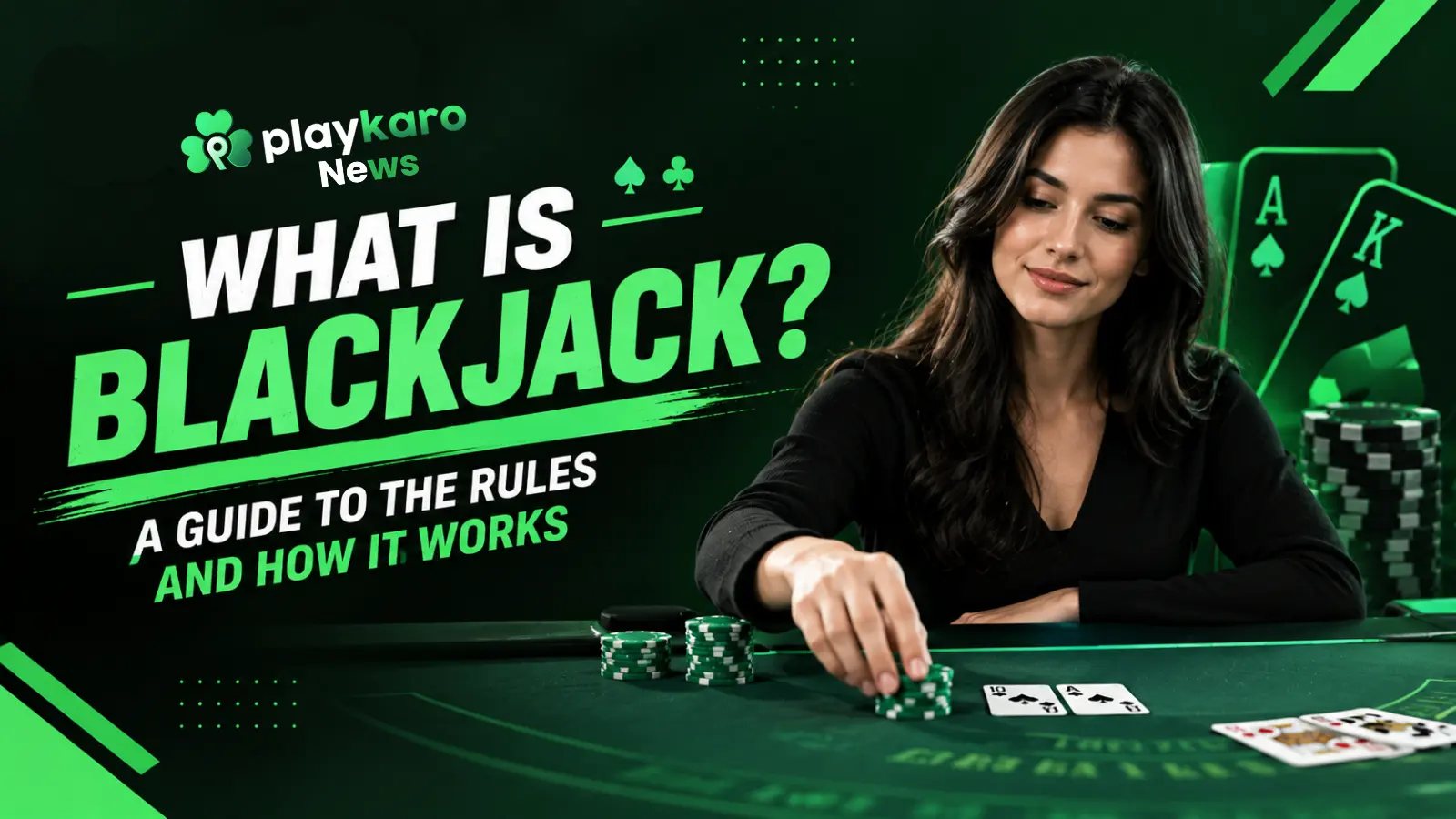
What if getting 21 is not actually the whole point of blackjack? The newbies only hear this term “reach 21” and think this is all about the round. However, you can succeed with 18, lose with 20, or bust before the dealer finishes. The real aim is beating the dealer without taking your hand above 21.
Once that idea clicks, the rest of the rounds becomes much easier to follow. So, what is blackjack beyond the familiar number everyone talks about? This guide from PlayKaro walks through the cards, player actions, dealer rules, and possible results.
Is Blackjack Just Beating the Dealer
When every user wonders exactly what is blackjack, the clearest answer starts with the dealer. You are trying to finish with a stronger valid hand than the dealer holds. Meanwhile, other players at the table do not directly decide whether your hand succeeds.
For example, your 19 beats a dealer total of 18 without reaching 21. However, your hand loses immediately when another card pushes the total beyond 21. Users commonly call that result a bust.
Card Values Are Easy Once You Know the Ace
Most card values take only a few moments to learn. Number cards keep their printed values, while every picture card counts as ten. However, the ace works differently because it can count as either one or eleven.
| Card | Value |
| 2 through 9 | Printed value |
| 10, Jack, Queen, King | 10 |
| Ace | 1 or 11 |
For instance, an ace with a six can count as seven or seventeen. This flexibility creates what players commonly call a soft hand. Meanwhile, an ace paired with any ten-value card creates a natural round.
A Round Moves in a Simple Order
Understanding blackjack gameplay becomes easier when you follow one round from beginning to end. First, the participant and dealer receive their opening cards according to the round rules. Usually, participants can see one of the dealer’s cards before making their choices.
Next, each player decides how to continue with the available actions. Once they finish, the dealer completes their hand under fixed rules. Finally, the valid totals determine the result of the round.
Therefore, learning how to play blackjack does not require memorising every possible card combination. Start with the order of play, then learn what each available action changes.
Also Read: A Guide to the Plinko Board and How It Works
How Four Actions Can Change Your Hand
Once the cards arrive, players normally choose from several actions during their turn. However, some choices depend on the hand and the rules used at that table.
| Action | What happens next |
| Hit | You receive another card |
| Stand | You keep your current total |
| Double | You increase the chance and receive one more card |
| Split | You divide an eligible pair into two hands |
A hit keeps your hand moving, while standing ends your card choices. Meanwhile, doubling usually gives you only one additional card after increasing the original chance.
Splitting works differently because one eligible pair becomes two separate hands. Still, exact doubling and splitting conditions can change between blackjack versions. Therefore, check the displayed PlayKaro blackjack rules before starting a particular contest.
Can Dealer Choose What Feels Right
One important detail often gets lost when beginners learn what is blackjack. Users make choices, but the dealer normally follows fixed instructions for drawing and standing.
Under common blackjack dealer rules, the dealer continues drawing below the required standing total. However, rules involving soft 17 can differ between versions. Some tables require another card, while other tables require the dealer to stand.
For example, an ace and six can form a soft 17. Therefore, checking the table rules matters before assuming every dealer follows identical instructions.
What is Blackjack, Bust & Push
Not every round ends with somebody simply reaching the higher number. Instead, several outcomes can appear depending on the cards held by both sides.
A natural blackjack comes from an opening ace and a ten-value card. Under standard rules, that hand receives special treatment compared with reaching 21 using several cards.
Meanwhile, exceeding 21 means your hand busts and loses immediately. If the dealer later busts, remaining eligible player hands can succeed. Equal valid totals commonly create a push, which returns the original chance under standard rules.
These outcomes answer another important part of what is blackjack. The number 21 matters, but the way your hand reaches its result matters too.
Can Rule Changes Show Difference
Blackjack may look identical across different tables, yet small rules can change between versions. For example, rounds can use different deck counts, splitting limits, doubling conditions, or dealer instructions.
Blackjack payouts can also vary depending on the round being offered. Therefore, reading the specific rules gives you better information than assuming every version works identically.
Before playing, review the blackjack rules shown for that particular round. You can also visit blogs when you want simple explanations of related round terms.
Knowing the Rules Does Not Control the Next Card
Learning how to play blackjack helps you understand what is happening on the table.
That distinction matters because blackjack still includes uncertain outcomes on every deal. Therefore, understanding the contest should never become an expectation that results will follow a certain pattern.
A practical responsible play approach means setting personal limits before starting and keeping them unchanged. Also, avoid treating previous losses as amounts that another hand needs to recover.
The Game Feels Different Once the Round Makes Sense
So, what is blackjack after removing all the confusing terms around the table? Simply put, you are trying to beat the dealer without pushing your cards above 21. Yet understanding the round also means knowing why an ace can change value. You should also know why dealers follow set rules and why equal totals can become pushes.
Once those pieces connect, blackjack gameplay becomes much easier to read from one deal to another. You stop seeing random cards and start understanding what each action actually changes. That is the useful starting point PlayKaro wants beginners to have before exploring any contest further.